

On 10 September, Kenya Power listed planned maintenance outages across ten counties, from Nairobi and Kiambu to Kisumu, Kilifi and Mombasa, with most areas off from 9am to 5pm. The notice went out on Kenya Power’s X account the evening before, as K24 reported. That is a full working day without stima, and it was a routine week. On average, Kenyan electricity customers lose 8.39 hours of power a month, against EPRA’s target of 1.5 hours.
A portable power station is the simplest way to keep a home office, a small shop or a family’s essentials running through those hours. There is no fuel to buy and nothing to install. You plug it into the wall, plug your things into it, and when the power goes it takes over by itself. This guide covers the eight EcoFlow units we stock in Nairobi, what the numbers on the box mean, and how to pick the right size for what you actually need to keep on.
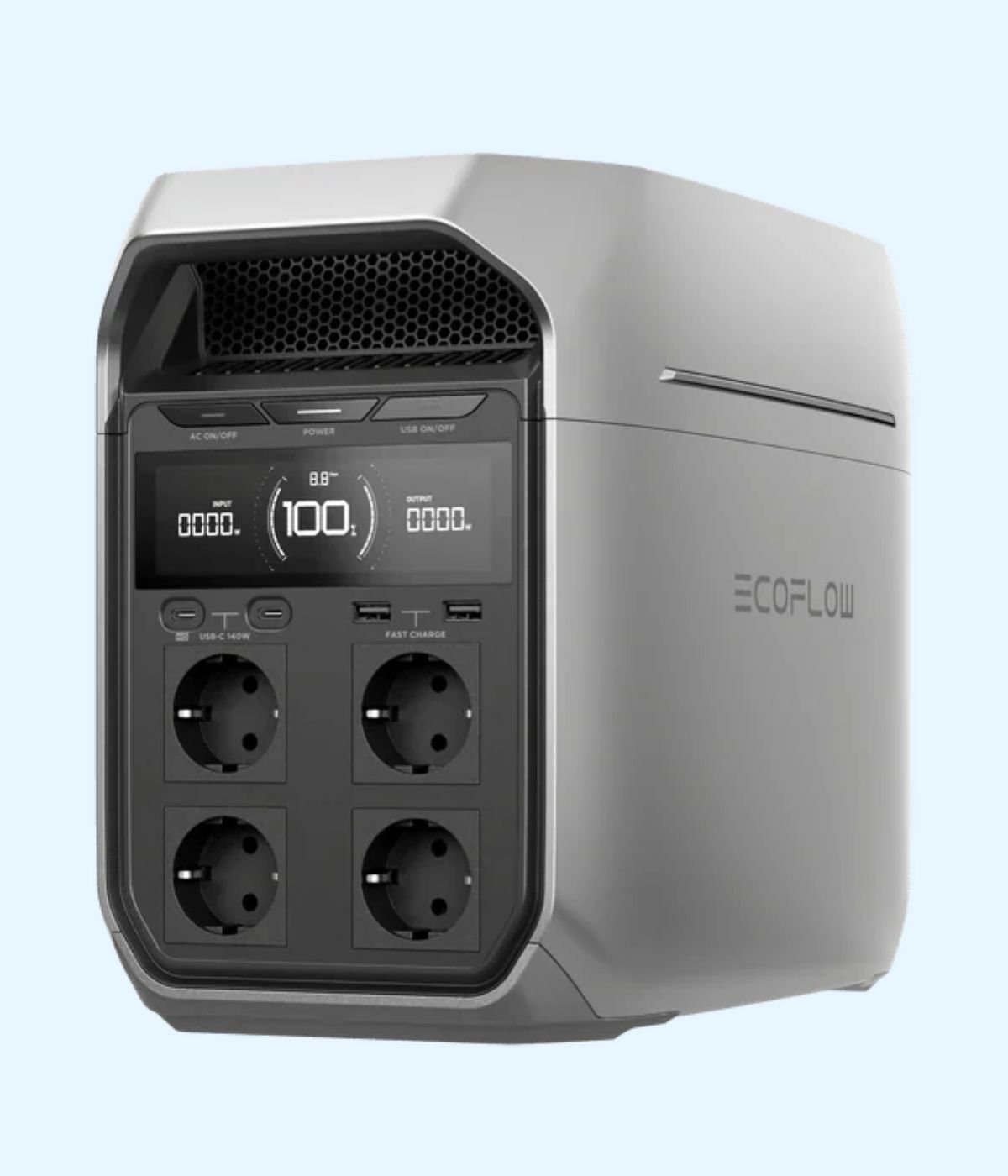
What a portable power station is, and what it is not
A portable power station is a large lithium battery, an inverter that turns stored battery power into normal household AC power, and a charger, all in one box with sockets and USB ports on the front. You can charge it from the wall, from solar panels, from a car or from a generator. When it is solar charged, people often call it a “solar generator”, which is why you will see both names used for the same product.
It sits between two things most Kenyan buyers already know:
- A petrol generator gives long runtime as long as you keep buying fuel, but it is loud, needs servicing and cannot be used indoors. The US Centers for Disease Control and Prevention is clear on this: never run a generator inside your home, garage or carport, and keep it at least 20 feet from doors, windows and vents, because of carbon monoxide. A power station burns nothing, so it can sit next to your desk or under the TV.
- A small home UPS, like the one in our piece on what to do when stima imeenda, is built to give you minutes to save your work and shut down. A power station gives you hours, and in the bigger models, a full day or more.
One honest limit: a power station switches to battery when the mains fails, with a gap measured in milliseconds. That is fine for laptops, routers, TVs, lights and most desktop PCs. Servers, network cores and medical or banking systems that cannot tolerate any break need an online double conversion UPS, where the load never runs directly off the grid. For those, see our guide to SIEL online UPS systems or how to size a rack mount UPS for a server rack.
The two numbers that decide everything: Wh and W
Every power station is described by two figures, and buyers mix them up all the time.
- Capacity, in watt-hours (Wh), is how much energy is stored. It decides how long you can run things.
- Rated output, in watts (W), is how much power it can deliver at one moment. It decides what you can run. If an appliance’s label says 1,500 W and the station is rated at 1,000 W, it will not run that appliance, however much battery is left.
To estimate runtime, a widely used rule of thumb is capacity in Wh multiplied by 0.85, divided by the watts you are drawing. The 0.85 allows for the energy lost turning battery power into AC. So if your Wi-Fi router, laptop and two LED bulbs together draw 100 W, a 1,024 Wh unit gives you roughly 1,024 × 0.85 ÷ 100, which is about 8.7 hours. That covers a full working day of planned maintenance. The watt figures for your own devices are printed on their chargers or labels; add them up and run the same sum.
The EcoFlow range in Kenya at a glance
| Model | Capacity | Rated AC output | Switch to battery | Price (KES, excl. VAT) |
|---|---|---|---|---|
| RIVER 3 | 245 Wh | 300 W | Under 20 ms | 33,500 |
| RIVER 3 Plus | 286 Wh, expandable | 600 W | Under 10 ms | 40,700 |
| DELTA 2 (E980) | 980 Wh | 500 W | Under 30 ms | 62,700 |
| DELTA 3 Classic | 1,024 Wh | 1,800 W | 10 ms | 96,800 |
| DELTA 3 2000 Air | 1,920 Wh | 1,000 W | 10 ms | 103,400 |
| DELTA 3 Plus | 1,024 Wh, expandable to 5 kWh | 1,800 W | Under 10 ms | 108,900 |
| DELTA Pro 3 | 4,096 Wh, expandable to 12 kWh | 4,000 W | 10 ms | 457,050 |
| RIVER 3 Plus Extra Battery (EB300) | Adds 286 Wh | Add-on | n/a | 26,620 |
Which one fits your needs
For a laptop, router and phone: RIVER 3 or RIVER 3 Plus
The EcoFlow RIVER 3 is the entry point. Independent testing by StorageReview lists it at 245 Wh, 300 W of AC output with up to 600 W in X-Boost mode, a full wall recharge in about 60 minutes and an LFP battery rated for 3,000 cycles to 80% capacity. It is quiet, under 30 dB, so it can sit on a bedroom desk. Think of it as the “keep the Wi-Fi and laptop alive” unit for a student or someone working from a flat.
The EcoFlow RIVER 3 Plus is the one we suggest most for home offices. EcoFlow rates it at 286 Wh, 600 W output (1,200 W with X-Boost), a switchover under 10 ms, a full recharge from the wall in 60 minutes and up to 220 W of solar input, all in a 4.7 kg body. Twice the output of the RIVER 3 leaves room for a desktop PC and monitor rather than only a laptop, though it is worth checking their wattage first.
It can also grow with you. The RIVER 3 Plus Smart Extra Battery (EB300) adds 286 Wh through a wire-free pogo pin connection, with no cables or screws, which roughly doubles your runtime. EcoFlow’s top figure of 858 Wh for the RIVER 3 Plus family is reached with its larger extra battery.
For long hours on light loads: DELTA 2 (E980)
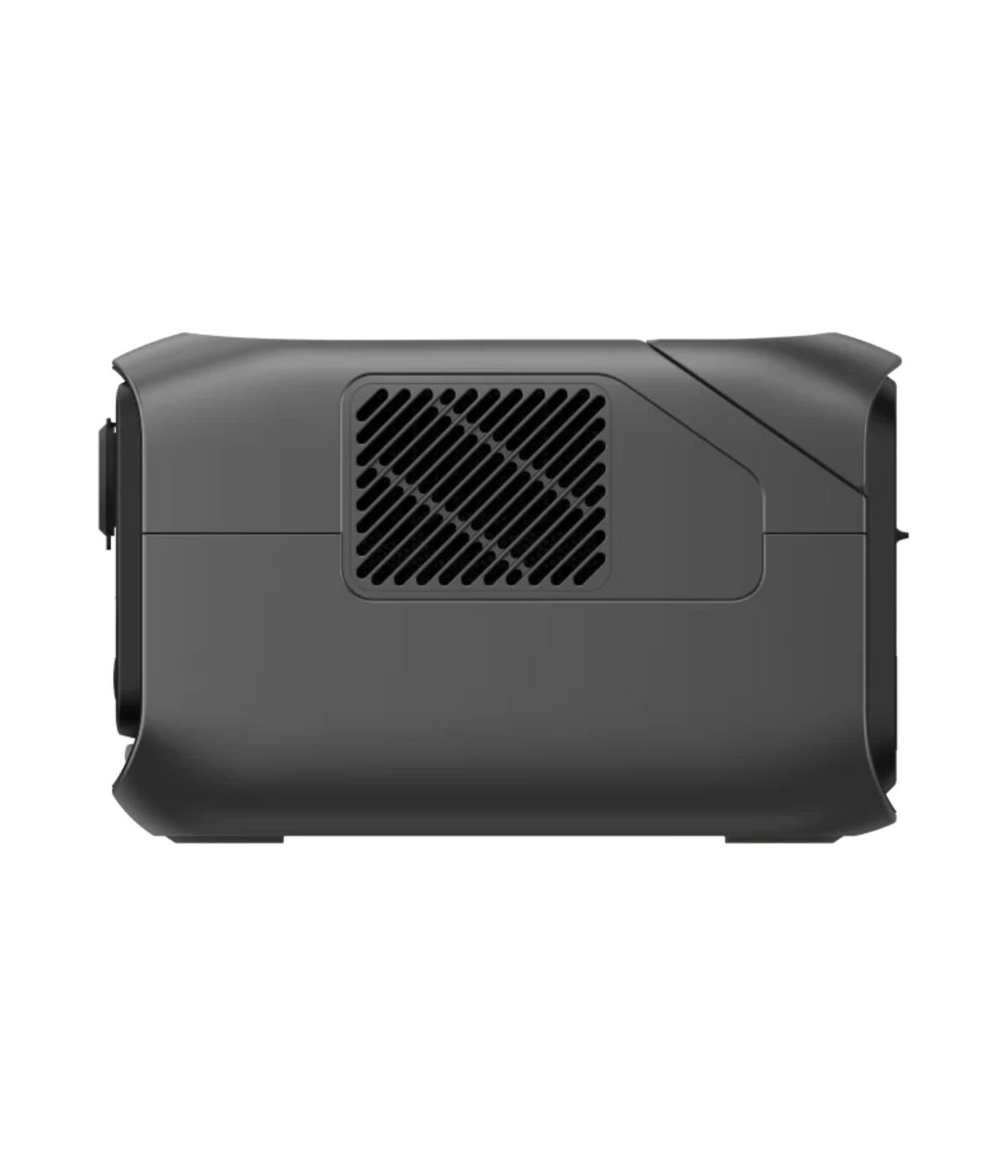
The EcoFlow DELTA 2 (E980) is an unusual mix: a big 980 Wh battery with a switchover under 30 ms, paired with a modest 500 W rated output (650 W with X-Boost), a 2 hour wall recharge and up to 500 W of solar input. That makes it a strong choice when you need many hours rather than high power: router, laptop, TV, decoder and lights through a long evening outage, or a small shop’s till, phone charging and lighting. It is not meant for high-wattage appliances like kettles.
For running real appliances: DELTA 3 Classic and DELTA 3 Plus
Both carry 1,024 Wh and 1,800 W of output, a big step up in what you can plug in. The EcoFlow DELTA 3 Classic is rated at 1,800 W with 3,600 W surge, a 10 ms switchover, 0 to 80% from the wall in 45 minutes and up to 500 W of solar input, and EcoFlow estimates around a 10 year lifespan. Its capacity is fixed, so buy it if 1 kWh is all you will ever need.
The EcoFlow DELTA 3 Plus costs a little more and earns it. EcoFlow lists expansion up to 5 kWh with extra batteries, two solar inputs of up to 500 W each, a switchover under 10 ms and 4,000 cycles to 80% capacity. If you plan to add solar panels on the roof later, or think your backup needs will grow, start here.
For the most stored energy per shilling: DELTA 3 2000 Air
The EcoFlow DELTA 3 2000 Air nearly doubles the battery of the DELTA 3 Classic for a small step up in price. EcoFlow lists 1,920 Wh, 1,000 W rated output, a 10 ms switchover, LFP cells and a fire-resistant UL94 V-0 casing. The trade-off is output: 1,000 W comfortably covers a home office, TV and lights, but not a 1,500 W kettle. For all-day backup of everyday loads, it is the best value in the range.
For a whole home or small business: DELTA Pro 3
The EcoFlow DELTA Pro 3 is a different class of machine. EcoFlow rates it at 4,096 Wh, 4,000 W output with 8,000 W surge, a 10 ms switchover, up to 2,600 W of solar input, expansion to 12 kWh and 4,000 cycles to 80% capacity. At 51.5 kg it comes on wheels with a handle. This is the unit for a family that wants most of the house to carry on through a long outage, or a clinic, salon, pharmacy or office that cannot close every time the area goes dark.

Three things to check before you buy
- Your biggest single appliance. Check its watt rating against the station’s rated output. Fridges and freezers draw a short surge when the compressor starts, so leave headroom.
- How many hours you need. A two hour evening outage and a 9am to 5pm maintenance shutdown need very different capacities. Use the runtime sum above with your own load.
- Whether you will add solar. If yes, look at solar input. The RIVER 3 takes 110 W, the RIVER 3 Plus 220 W, the DELTA 3 Plus up to 1,000 W across two inputs and the DELTA Pro 3 up to 2,600 W. More solar input means a faster recharge during the day, even when the grid is off for days.
Buying a portable power station from Encom
All eight units are listed in our portable power stations range and can be ordered online. If you are not sure which size fits, send us a list of what you want to keep running and for how long, and we will match it to the right unit. Request a quote on WhatsApp on +254 714 962 072, or Email us. You can also see them at Rehema House, 4th Floor, Standard Street, Nairobi.
Frequently asked questions
What is a portable power station?
It is a lithium battery, an inverter and a charger in one box, with household sockets and USB ports. You charge it from the wall, solar, a car or a generator, and it powers your devices when the mains goes off.
Is a portable power station the same as a solar generator?
Yes, in practice. “Solar generator” usually means a portable power station charged from solar panels.
Does it switch on by itself when the power goes?
Yes. Keep it plugged into the wall with your devices plugged into it. EcoFlow rates the switchover at under 10 ms on the RIVER 3 Plus and DELTA 3 Plus, 10 ms on the DELTA 3 Classic, DELTA 3 2000 Air and DELTA Pro 3, under 20 ms on the RIVER 3 and under 30 ms on the DELTA 2 (E980).
Can a power station replace a UPS for servers?
For servers and other loads that cannot tolerate any break, use an online double conversion UPS, such as the SIEL range we supply. A power station is ideal for home and office equipment.
How long will a power station run my things?
Multiply the capacity in Wh by 0.85, then divide by the total watts you are drawing. A 1,024 Wh unit running 100 W of devices lasts roughly 8.7 hours.
Can it run a fridge or a kettle?
Check the watt rating on the appliance label. If it is higher than the station’s rated output, it will not run on that unit. The DELTA 3 Classic and DELTA 3 Plus give 1,800 W and the DELTA Pro 3 gives 4,000 W. Fridges also draw a short surge when the compressor starts.
Which EcoFlow is best for working from home?
The RIVER 3 Plus suits most home offices, with 600 W output and a switchover under 10 ms. For a laptop and router only, the RIVER 3 is enough. For a full day of work through planned maintenance, look at the DELTA 2 (E980) or a DELTA 3 model.
Which EcoFlow can back up a whole house?
The DELTA Pro 3, with 4,096 Wh, 4,000 W output and expansion up to 12 kWh.
Can I charge it with solar panels?
Yes. Every model in our range takes solar input, from 110 W on the RIVER 3 up to 2,600 W on the DELTA Pro 3.
Can I add more battery later?
On some models. The RIVER 3 Plus takes the EB300 extra battery, the DELTA 3 Plus expands up to 5 kWh and the DELTA Pro 3 up to 12 kWh. The DELTA 3 Classic is not expandable.
What is an LFP battery?
LFP means lithium iron phosphate (LiFePO4). EcoFlow rates its LFP models for thousands of charge cycles, for example 4,000 cycles to 80% capacity on the DELTA 3 Plus and DELTA Pro 3.
Is it safe to use indoors?
Yes. A power station burns no fuel and gives off no fumes, unlike a petrol generator, which must always run outdoors.
Do your prices include VAT?
No. Encom prices are quoted excluding VAT.
Where can I buy an EcoFlow power station in Nairobi?
On shop.encom.africa, or at our office in Rehema House, 4th Floor, Standard Street, Nairobi. You can also order on WhatsApp on +254 714 962 072 or by email at info@encom.africa.