

Kenyan electricity customers had an average of 3.57 outages a month in the year to June 2025, more than twice EPRA’s own benchmark of 1.63, according to EPRA figures reported by The Eastleigh Voice. Each of those is a moment when a server, a switch or a storage box either rides through on a UPS or goes down hard. For anything sitting in a 19 inch cabinet, the UPS that does that job best is one that lives in the same rack.
This guide is for IT managers, system administrators and anyone setting up a server room or network cabinet in Kenya. It covers what a rack mount UPS is, how to size one for your servers, how much rack space and depth to plan for, and how the SIEL Greenpoint range fits from 1 to 10 kVA.
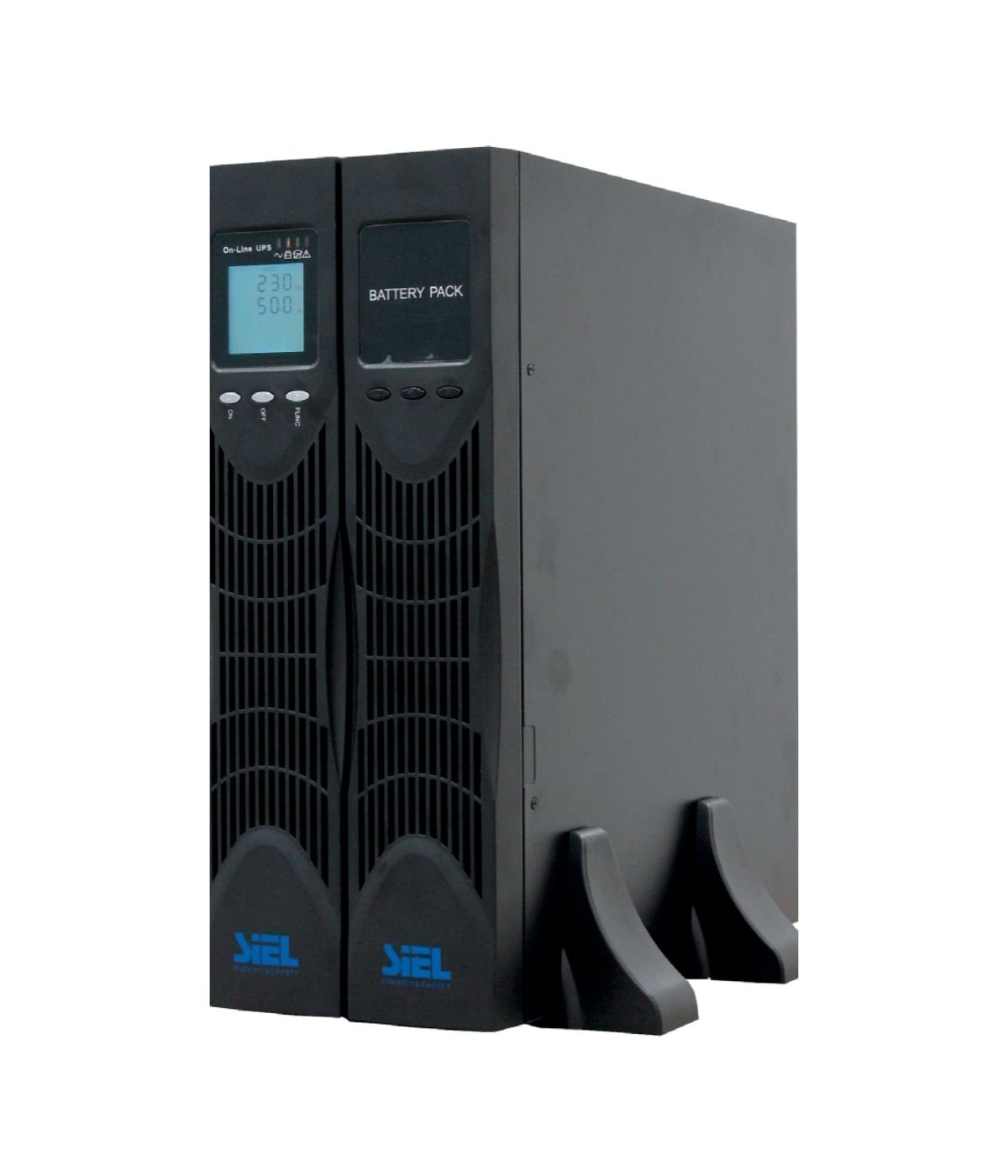
What a rack mount UPS is, and why servers need one
A rack mount UPS is built to the same 19 inch width as your servers and switches, so it bolts into the cabinet instead of sitting on the floor beside it. Rack height is counted in units, and one rack unit (1U) is 44.45 mm. A 2U UPS therefore takes the same space as two thin 1U servers.
Keeping the UPS in the rack gives you short, tidy power runs, keeps the floor clear and puts the UPS where the people who manage the servers can see it. For server work the type of UPS matters as much as the form factor. Every Greenpoint model is an online double conversion UPS, rated VFI-SS-111 under IEC EN 62040-3. Your servers run all the time from power the UPS has rebuilt itself, so there is no switchover gap when the mains drops. We explain double conversion and that rating in more detail in our guide to the SIEL UPS ranges in Kenya.
Step 1: Work out your real load in watts
Start with what you are protecting. List every device that will plug into the UPS: servers, storage, switches, the firewall, the router and any KVM or monitor in the rack. Then find how much power each one actually draws.
- Best: read the live draw from the server’s management interface or from a metered power strip, at a busy time of day.
- Good: use the vendor’s power calculator for your exact server configuration.
- Last resort: use the power supply nameplate. Nameplates show the maximum the supply can deliver, not what the server uses, so this overstates the load.
Watts and VA are not the same thing. Watts are the real power the equipment uses. VA is voltage multiplied by current, and for computer equipment the VA figure is always equal to or larger than the watt figure. A UPS has both ratings and neither can be exceeded. Many UPS units carry a watt rating well below their VA rating, which is how people end up overloading a “3 kVA” unit with 2.5 kW of servers.
Greenpoint removes that trap. SIEL rates every model at an output power factor of 1, so the kVA and kW figures are the same. A Greenpoint 3K delivers 3 kVA and 3 kW. Our guide to the 1K, 2K, 3K and 6K Greenpoint helps you pick between the smaller sizes.
If you only have nameplate figures, Schneider Electric’s guidance for APC units is to keep the total nameplate rating below 60% of the UPS VA rating. It is conservative, and it usually gives you extra runtime as a bonus. If you have measured figures, you can size closer, but still leave room for the next server you will add.
A worked example
A small office server cabinet in Westlands holds two servers drawing about 350 W each under load, a 24 port switch at 60 W, a firewall at 40 W and a NAS at 90 W. That adds up to 890 W.
- A Greenpoint 1K could technically carry it, but it would run at 89% of its rating with no room to grow and very little runtime.
- A Greenpoint 2K carries the same load at about 45%, leaves space for another server and gives noticeably more battery time from the same batteries.
For most small server cabinets, that kind of margin is the sensible choice.
Step 2: Plan rack space, depth and weight
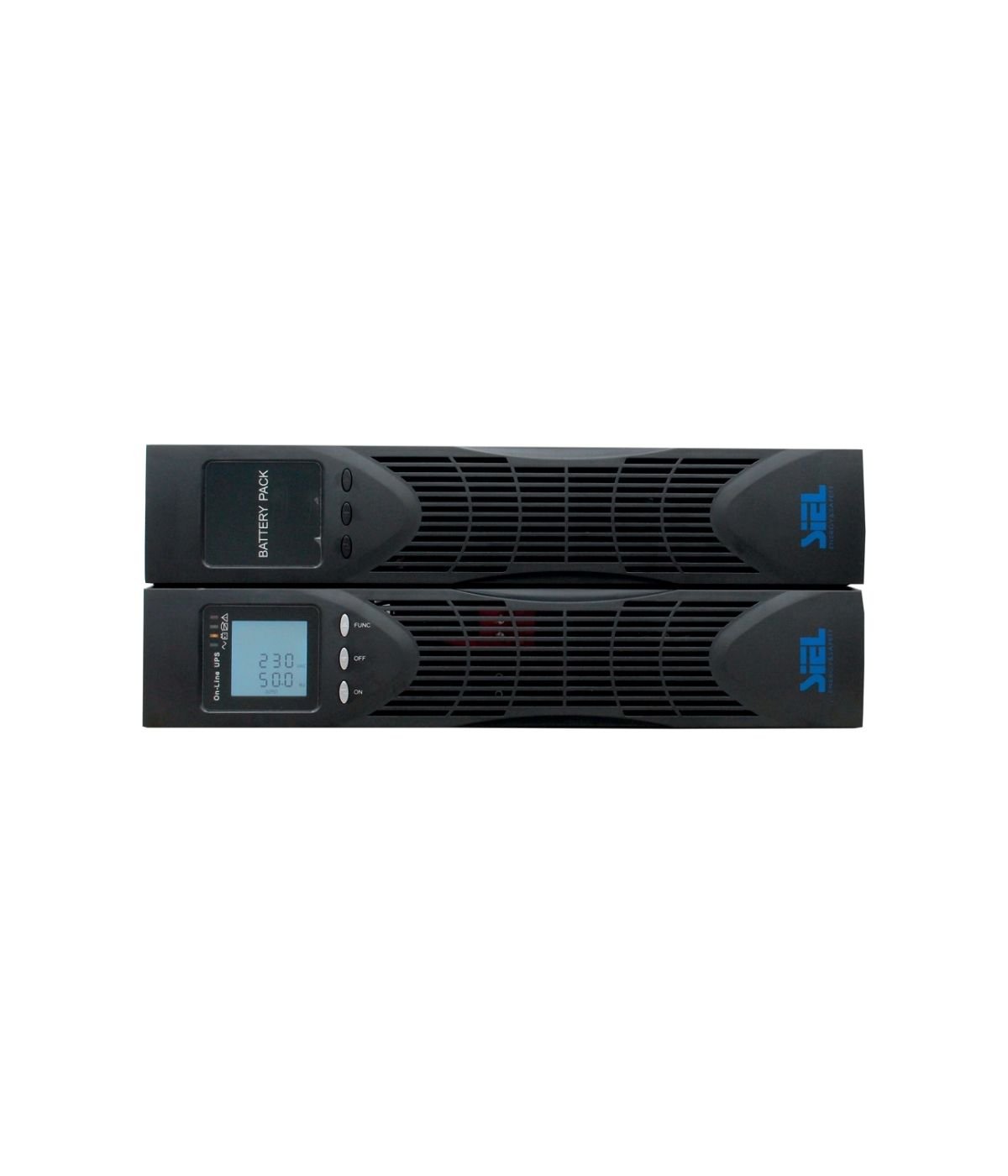
Height is rarely the problem. Depth and weight are. All Greenpoint models are 2U high and 440 mm wide, which fits a standard 19 inch rack. The depth grows with the power rating, and the optional battery boxes add their own height and depth.
| Model | Output | UPS size (W x D x H) | Max weight | Output sockets | Optional battery box |
|---|---|---|---|---|---|
| Greenpoint 1K | 1 kVA / 1 kW | 440 x 325 x 86.5 mm (2U) | 13 kg | 8 x IEC C13 | 2U, 430 mm deep |
| Greenpoint 2K | 2 kVA / 2 kW | 440 x 460 x 86.5 mm (2U) | 21 kg | 8 x IEC C13 | 2U, 552 mm deep |
| Greenpoint 3K | 3 kVA / 3 kW | 440 x 600 x 86.5 mm (2U) | 29 kg | 8 x IEC C13, 1 x IEC C19 | 2U, 720 mm deep |
| Greenpoint 6K | 6 kVA / 6 kW | 440 x 621 x 86.5 mm (2U) | 15.4 kg | 3 x IEC C13, 2 x IEC C19, terminal block | 3U, 681.5 mm deep |
| Greenpoint 10K | 10 kVA / 10 kW | 440 x 621 x 86.5 mm (2U) | 17 kg | 3 x IEC C13, 2 x IEC C19, terminal block | 3U, 681.5 mm deep |
Three things to check before you order:
- Cabinet depth. Measure the usable depth between the front and rear rails. The 3K battery box is 720 mm deep, deeper than the UPS itself, so a shallow wall cabinet will not take it.
- Position. Mount the UPS and its battery boxes at the bottom of the rack. It keeps the heaviest items low and makes the cabinet more stable.
- Connections. The 1K to 3K models plug straight into the rack with IEC leads. The 6K and 10K add a terminal block for hardwired output, which a qualified electrician should connect along with the input supply.
Step 3: Decide how long it must run
Runtime is where most server UPS plans go wrong. Planned maintenance outages in Kenya can last a full working day. On 27 April 2026, for example, Kenya Power listed a planned interruption from 9.00 am to 5.00 pm for parts of Nairobi West, including Strathmore University and Nairobi West Hospital. No rack UPS battery is meant to carry servers for eight hours. That is generator territory.
So decide which of these describes your site:
- You have a generator. The UPS only needs to carry the load until the generator starts and settles, plus a safety margin. A few minutes of runtime is often enough. Greenpoint supports generator input and accepts an input range of 110 to 300 V, so a generator that sags while starting does not push the servers onto battery straight away.
- You have no generator. Size the runtime for a clean shutdown, not to ride out the whole outage. That means enough minutes for every server to save its work and power down in order.
- You need longer runtime. Each Greenpoint takes up to four external battery boxes. SIEL’s battery boxes are hot swappable, so you can replace batteries without switching off the load.
The 6K and 10K models also accept an optional lithium (LiFePO4) battery in place of AGM, which is worth considering where battery replacement visits are hard to arrange.
Step 4: Keep the batteries cool
Heat is the quiet killer of UPS batteries. The best operating temperature for a lead acid battery is 20 to 25 °C, and every 8 °C rise in temperature cuts battery life in half. A battery that would last four years at 25 °C lasts about two at 33 °C.
That matters in a Mombasa office, in a store room with no air conditioning, or in a cabinet packed with servers and no airflow. SIEL rates the Greenpoint for 0 to 40 °C and up to 95% humidity without condensation, but the batteries will last longest if the room stays in the low to mid twenties.
Step 5: Connect the UPS to your network
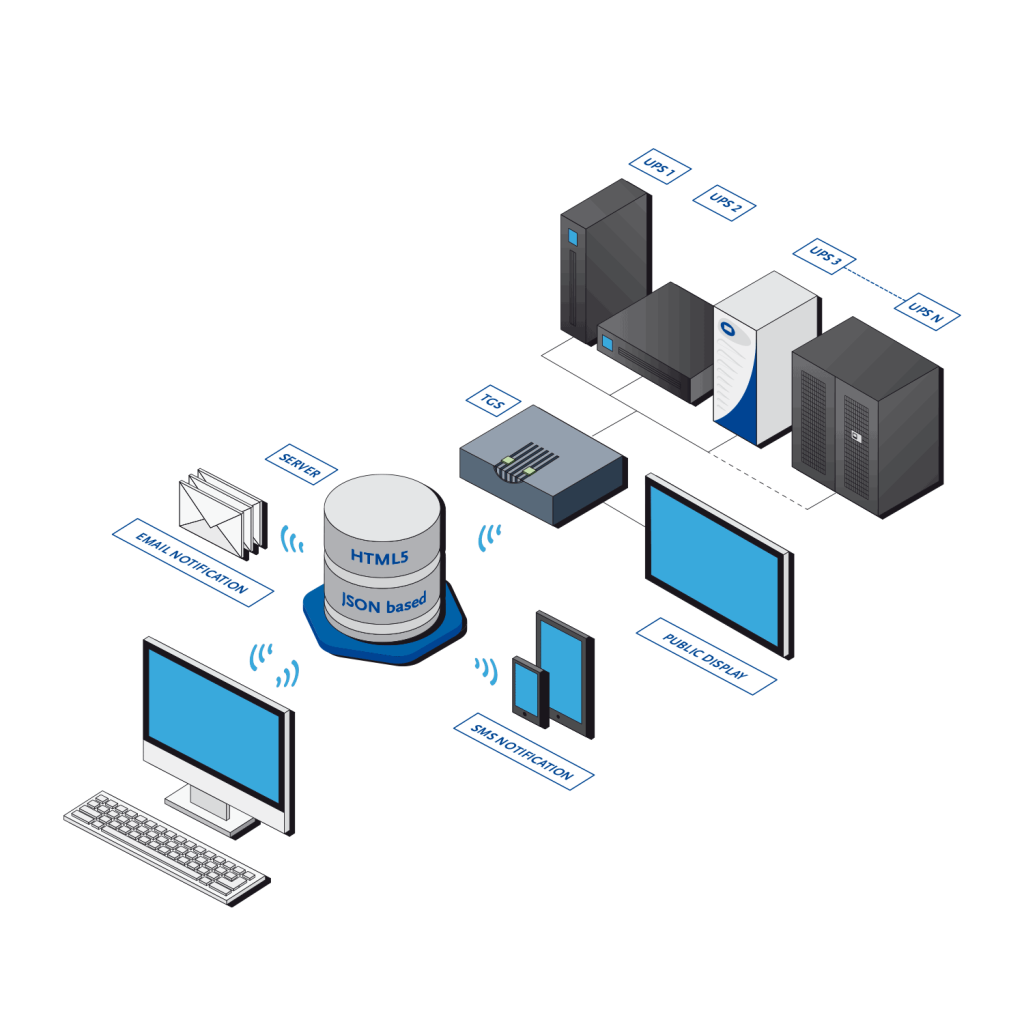
A server UPS that nobody can see is half a UPS. Greenpoint comes with RS232, USB, relay contacts and SNMP as standard, so you can monitor load, battery state and alarms over your network. In server rooms, UPS network cards are often paired with shutdown software that can run graceful, sequenced shutdowns of servers and virtual machines during long outages. Tell us what you run and we will confirm the monitoring and shutdown setup for your site when we quote. For larger rooms that need N+1 redundancy, see our data centre UPS guide.
Greenpoint also has an emergency power off (EPO) input for sites that need one, and a cold start function, so you can power it up from batteries when the mains is already down.
Which Greenpoint for which rack
- SIEL Greenpoint 1K: a network cabinet with a router, switch, firewall and one small server.
- SIEL Greenpoint 2K: one or two servers with networking and a NAS, as in the example above.
- SIEL Greenpoint 3K: a busier cabinet of several servers and storage, with a C19 socket for higher draw equipment.
- SIEL Greenpoint 6K: a full rack or a small server room on single-phase power.
- SIEL Greenpoint 10K: a dense single-phase server room up to 10 kW.
If your load is above 10 kW, or your building has a three-phase supply, look at the SIEL Safepower S and SIEL Safepower Evo HF floor standing ranges instead. For a single PC or a home office rather than a server rack, our piece on keeping your work going when stima imeenda is the better starting point.
Getting a quote for a SIEL rack mount UPS
SIEL units are supplied on order and configured for your load, so pricing is by quote, and our prices are quoted excluding VAT. To quote quickly, send us your equipment list or measured load in watts, the runtime you need, whether you have a generator, and the usable depth of your rack.
Request a quote on WhatsApp on +254 714 962 072, or Email us and we will come back with the right Greenpoint model and battery setup. You can also see the full SIEL UPS range on the shop.
Frequently asked questions
What is a rack mount UPS?
A UPS built to the standard 19 inch width so it mounts inside a server or network cabinet alongside your servers and switches, instead of standing on the floor.
How many rack units does a SIEL Greenpoint take?
Every Greenpoint model is 2U high. The optional battery boxes take 2U each for the 1K to 3K models and 3U each for the 6K and 10K.
Can the Greenpoint stand on the floor instead?
Yes. It converts between rack and tower mounting, so you can use it as a tower where there is no rack.
How do I size a UPS for my servers?
Add up the real power draw of everything on the UPS in watts, then choose a model with clear headroom above that figure. If you only have nameplate ratings, keep the total below about 60% of the UPS rating.
What is the difference between kVA and kW on a UPS?
kW is the real power your equipment uses and kVA is apparent power. Many UPS units can deliver fewer kW than their kVA rating. Greenpoint has an output power factor of 1, so a 3 kVA model delivers 3 kW.
How deep does my rack need to be?
The UPS ranges from 325 mm deep on the 1K to 621 mm on the 6K and 10K. The battery boxes can be deeper, up to 720 mm for the 3K, so measure the usable depth between your rails first.
How long will a Greenpoint run my servers?
It depends on the load and the batteries fitted. You can add up to four external battery boxes per UPS. Tell us your load and the runtime you want and we will configure it.
Do I need a generator as well as a UPS?
For long outages, yes. Planned Kenya Power maintenance can last a full working day, which is far beyond what a rack UPS battery is meant to cover. The UPS bridges the gap until the generator takes over.
Does the Greenpoint work with a generator?
Yes. SIEL lists generator support, and the wide input range of 110 to 300 V helps the UPS ride through the voltage dips of a generator starting up.
Can I monitor the UPS over my network?
Yes. RS232, USB, relay contacts and SNMP come as standard, so you can watch load, battery and alarms from your network monitoring tools.
Can I replace the batteries without shutting down my servers?
SIEL lists the Greenpoint battery boxes as hot swappable, so batteries can be changed with the load still running.
Is there a lithium battery option?
Yes, on the Greenpoint 6K and 10K, which can take LiFePO4 batteries instead of AGM.
Why are my UPS batteries dying early?
Heat is the usual cause. Lead acid battery life halves for every 8 °C above about 25 °C, so a hot server room or a cabinet with poor airflow shortens battery life a lot.
Do the 6K and 10K need an electrician?
Their output includes a terminal block for hardwired connections, and models at that power level should be connected by a qualified electrician.
When should I choose a three-phase UPS instead?
When your load is above 10 kW or your building has a three-phase supply. The SIEL Safepower S and Safepower Evo HF cover 10 to 200 kVA.
How much does a SIEL Greenpoint cost in Kenya?
SIEL units are supplied on order and priced by quote, and our prices exclude VAT. Send us your load, runtime and rack details on WhatsApp or by email for a quote.